

-64%

Protonix
Price range: $ 19,00 through $ 217,00
Provigil
Price range: $ 47,00 through $ 301,00
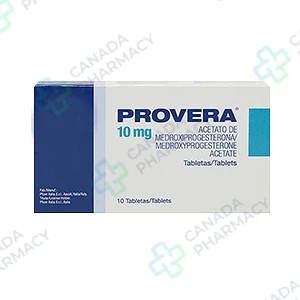
Provera
Price range: $ 14,00 through $ 265,00
Provera is an effective hormonal medication containing medroxyprogesterone acetate, a synthetic version of the natural hormone progesterone. This treatment is primarily used to restore regular menstrual cycles in women experiencing secondary amenorrhea. Additionally, it helps manage abnormal uterine bleeding caused by hormonal imbalances to ensure a healthier cycle. Provera is also indicated for postmenopausal women to reduce the risk of endometrial hyperplasia while undergoing estrogen replacement therapy. By regulating the growth and shedding of the uterine lining, this medication provides essential support for various female reproductive health concerns.
Active substance: Medroxyprogesterone
Delivery: 5–21 days (depending on the shipping method)
Extra 10% discount with coupon: IT4K6SVM
Each dosage option has its own packaging choices.
Description
Provera belongs to a class of medications known as synthetic progestins, which closely resemble the naturally occurring female hormone progesterone. In the United States, this medication is available by prescription only and must be dispensed in compliance with applicable federal and state regulations.
It plays a critical role in regulating reproductive hormones and modifying endometrial tissue in specified clinical regimens. Prescribers frequently utilize medroxyprogesterone acetate to manage menstrual irregularities and prevent endometrial overgrowth in postmenopausal hormone management.
Basic Information and Core Pharmacological Characteristics
| Parameter | Details |
|---|---|
| Drug Name | Provera |
| Active Ingredient (INN) | Medroxyprogesterone acetate |
| Therapeutic Class | Synthetic progestin |
| Dosage Form | Oral tablet (2.5 mg, 5 mg, 10 mg) |
| Route of Administration | Oral |
| Prescription Status | Prescription (Rx) only |
How the Drug Works
Medroxyprogesterone acetate functions by binding to specific progesterone receptors located in the female reproductive tract, pituitary gland, and hypothalamus. By stimulating these receptors, the active substance suppresses the secretion of pituitary gonadotropins, specifically luteinizing hormone (LH) and follicle-stimulating hormone (FSH). This inhibition prevents follicular maturation and suppresses ovulation when administered in adequate systemic doses. At the tissue level within the uterus, medroxyprogesterone acetate transforms an estrogen-primed proliferative endometrium into a secretory phase endometrium. Following completion of a prescribed treatment cycle, a prompt withdrawal bleeding usually occurs within 3 to 7 days, mimicking normal physiological menstrual shedding. The drug also exerts anti-estrogenic activity, directly opposing estrogen-driven cellular proliferation in endometrial tissue.
Main Uses
Provera is approved by the US Food and Drug Administration (FDA) for specific gynecological indications. It is indicated for the management of secondary amenorrhea, defined as the absence of menses in women who have previously menstruated, provided that organic pathology such as pregnancy or anatomical lesions has been ruled out. The medication is also indicated for the treatment of abnormal uterine bleeding caused by hormonal imbalance in the absence of structural organic conditions like uterine fibroids or cervical carcinoma. Furthermore, medroxyprogesterone acetate is indicated to reduce the risk of endometrial hyperplasia in postmenopausal women with an intact uterus who are receiving co-administered conjugated estrogens. Off-label indications, which are not explicitly included in the standard FDA product label, may encompass the palliative management of advanced hormone-dependent endometrial carcinoma or specialized off-label hormonal regimens for severe endometriosis.
Key Indications and Dosages
Dosing Schedule
The dosing regimen for oral Provera varies according to the specific clinical indication under treatment. For secondary amenorrhea, the typical dosage is 5 mg to 10 mg taken orally once daily for 5 to 10 consecutive days. Withdrawal bleeding generally begins within 3 to 7 days after completing the course. For abnormal uterine bleeding, a dosage of 5 mg to 10 mg daily for 5 to 10 days is commonly prescribed, frequently beginning on the 16th or 21st day of the menstrual cycle. To prevent endometrial hyperplasia in postmenopausal women taking conjugated estrogens, medroxyprogesterone acetate may be administered as a continuous regimen of 2.5 mg to 5 mg daily, or as a sequential regimen of 5 mg to 10 mg daily for 12 to 14 consecutive days per month. Tablets should be swallowed whole with a glass of water.
What Happens in the Body
Oral medroxyprogesterone acetate is rapidly absorbed from the gastrointestinal tract following administration. Peak blood serum concentrations (Cmax) are typically attained within 2 to 4 hours post-ingestion. Co-administration alongside meals moderately increases total drug availability and peak concentration without compromising overall therapeutic action. In systemic circulation, approximately 90% to 95% of the compound is bound to plasma proteins, primarily serum albumin. Medroxyprogesterone acetate undergoes extensive hepatic metabolism mediated by the cytochrome P450 enzyme system, specifically the CYP3A4 isoenzyme. Metabolites are excreted predominantly through urine, with a smaller proportion eliminated in the feces. The elimination half-life of oral medroxyprogesterone acetate in healthy adult subjects is estimated to range between 12 and 17 hours.
If You Skip a Dose
If a dose of Provera is missed, the patient should take the missed tablet as soon as it is remembered on that day. However, if it is nearly time for the next scheduled dose, the missed dose should be skipped entirely, and the regular dosing schedule should be resumed. Patients must avoid taking two doses at the same time to compensate for a missed tablet, as doubling the dose elevates the risk of experiencing adverse effects such as nausea or irregular spotting. If multiple doses are missed in succession during an active treatment cycle, consultation with a healthcare provider is recommended to determine appropriate adjustments.
Evaluating the Effect
Determining whether Provera is achieving its intended therapeutic outcome depends on the condition being managed. In patients treated for secondary amenorrhea, successful treatment is marked by predictable withdrawal bleeding occurring within several days following completion of the multi-day pill course. For abnormal uterine bleeding, efficacy is demonstrated by the cessation of irregular bleeding patterns and the restoration of predictable menstrual timing. In postmenopausal women taking the drug in combination with estrogen therapy, success is determined by preventing endometrial overgrowth, which may be periodically assessed by healthcare providers using diagnostic transvaginal ultrasound or endometrial tissue sampling when clinically indicated.
Clinical Guidelines, Safety Considerations, and FAQs
Safety Warnings and Risk Factors
Important Precautions
Provera carries critical warnings regarding cardiovascular, cerebrovascular, and neoplastic risks. The combination of estrogen and progestin therapy should not be prescribed for the prevention of cardiovascular disease or cognitive decline. Clinical studies indicate an increased risk of deep vein thrombosis, pulmonary embolism, myocardial infarction, and stroke in postmenopausal women receiving combination hormonal therapy. Provera is contraindicated in patients with active or historical arterial thromboembolic events, deep vein thrombosis, active liver disease or dysfunction, or known or suspected breast malignancy. Prolonged use of progestational agents may also contribute to loss of bone mineral density. Patients with health conditions that can be aggravated by fluid retention–such as bronchial asthma, epilepsy, migraine headaches, or cardiac dysfunction–require close medical surveillance during treatment.
Adverse Reactions
Adverse reactions during treatment with medroxyprogesterone acetate may affect multiple organ systems. The most frequently reported side effects involve menstrual changes, including unexpected breakthrough bleeding, spotting, alterations in menstrual volume, and temporary amenorrhea. Cutaneous side effects may include acne, mild hirsutism, alopecia, urticaria, or pruritus. Central nervous system reactions include tension headaches, nervousness, insomnia, somnolence, dizziness, and mood alterations such as depression. Gastrointestinal and metabolic events often manifest as nausea, abdominal discomfort, weight gain, and peripheral edema secondary to fluid retention. Less common but severe adverse events include liver function abnormalities, cholestatic jaundice, and serious thromboembolic disorders.
Compatibility With Other Medicines
Medroxyprogesterone acetate exhibits clinically significant drug interactions when combined with specific agents that alter hepatic metabolism. Potent inducers of the hepatic enzyme CYP3A4–including rifampin, carbamazepine, phenytoin, phenobarbital, and St. John’s wort–can accelerate the metabolic breakdown of medroxyprogesterone acetate, lowering circulating plasma concentrations and potentially diminishing therapeutic efficacy. Conversely, strong CYP3A4 inhibitors such as ketoconazole, itraconazole, clarithromycin, and ritonavir can decrease drug clearance, leading to elevated blood concentrations and an increased risk of side effects. Additionally, medroxyprogesterone acetate may affect glucose tolerance, requiring dose adjustments of insulin or oral antidiabetic medications in patients with diabetes mellitus.
What to Avoid While Taking It
While Provera may be ingested with or without food, taking the tablet with a meal high in fat moderately increases systemic exposure, which can assist patients who experience mild stomach distress when taking medication on an empty stomach. Consuming alcohol does not directly interfere with the chemical breakdown of medroxyprogesterone acetate; however, chronic or excessive alcohol intake exerts stress on liver function, potentially altering steroid hormone clearance. Patients are encouraged to avoid heavy alcohol consumption during treatment. Furthermore, consuming large amounts of grapefruit juice may inhibit intestinal CYP3A4 activity, causing unexpected elevations in hormone absorption.
Special Populations
The administration of Provera is contraindicated during pregnancy, as exposure to progestational drugs in early pregnancy can adversely affect fetal development. If pregnancy is diagnosed or suspected during treatment, medication must be stopped immediately. Medroxyprogesterone acetate is excreted into human breast milk in small measurable quantities; women who are breastfeeding should consult a healthcare provider to assess potential risks before using this medication. Safety and effectiveness in pediatric patients who have not achieved menarche have not been established. In elderly postmenopausal individuals, therapy must be introduced with caution, utilizing the lowest effective dose for the shortest duration consistent with therapeutic goals.
Commonly Asked Questions
What should I do if unexpected breakthrough bleeding occurs during therapy?
Spotting or breakthrough bleeding can occur during the initial cycles of Provera therapy as the uterine lining adapts to hormonal shifts. If light spotting occurs, continue taking the medication as prescribed. However, if the bleeding becomes persistent, abnormally heavy, or is accompanied by severe pelvic pain, notify your doctor promptly to evaluate your pelvic health and rule out underlying issues.
How does oral Provera differ from long-acting injectable progestins?
Oral Provera tablets contain medroxyprogesterone acetate intended for short-term daily administration or cyclic therapeutic courses to manage menstrual disorders and endometrial safety. In contrast, high-dose injectable formulations are designed to provide long-acting systemic contraception or oncology management lasting three months per injection. The oral tablet formulation is not indicated for primary contraception.
Can oral Provera tablets be used as a primary birth control method?
No. Oral Provera tablets are not FDA-approved for use as a primary contraceptive agent. While progestins alter cervical mucus and the endometrium, the dosage schedules for oral Provera (such as 5 to 10 days per month) do not provide reliable continuous protection against pregnancy. Patients requiring contraception should discuss appropriate birth control options with their healthcare provider.
Is it normal to experience weight fluctuations while taking medroxyprogesterone acetate?
Fluid retention and minor weight fluctuations are recognized side effects of medroxyprogesterone acetate therapy. Progestins can cause mild sodium and water retention in peripheral tissues, leading to temporary bloating or slight weight gain. Maintaining a balanced diet and monitoring fluid changes can help manage these effects during short-term therapy cycles.
What signs indicate that I should stop taking Provera immediately and call a doctor?
You should seek immediate emergency medical evaluation if you experience symptoms indicative of a thromboembolic event or severe allergic reaction. Key warning signs include sudden severe chest pain, shortness of breath, coughing up blood, swelling or tenderness in one leg, severe unexpected headaches, sudden vision changes, yellowing of the skin or eyes (jaundice), or swelling of the face, lips, or throat.
In accordance with FDA requirements.
This text is for informational purposes only and does not constitute individual medical advice.
Additional information
| Dosage |
2.5 mg ,5 mg ,10mg |
|---|---|
| Package |
20 pills ,30 pills ,60 pills ,90 pills ,120 pills ,180 pills ,270 pills ,360 pills |
| Ενεργός Ουσία |
Related products
Aygestin
Price range: $ 58,00 through $ 290,00
Active substance: Norethindrone
More Details
This product has multiple variants. The options may be chosen on the product page

Betahistine
Price range: $ 41,00 through $ 311,00
Active substance: Betahistine
More Details
This product has multiple variants. The options may be chosen on the product page

Cabgolin
Price range: $ 134,00 through $ 356,00
Active substance: Cabergoline
More Details
This product has multiple variants. The options may be chosen on the product page

Conjubrook
Price range: $ 215,00 through $ 705,00
Active substance: Conjugated Estrogens
More Details
This product has multiple variants. The options may be chosen on the product page

Enclomisign
Price range: $ 85,00 through $ 189,00
Active substance: Enclomiphene
More Details
This product has multiple variants. The options may be chosen on the product page

Estriol Cream
Price range: $ 13,00 through $ 93,00
Active substance: Estriol
More Details
This product has multiple variants. The options may be chosen on the product page

Femalefil
Price range: $ 46,00 through $ 89,00
Active substance: Tadalafil
More Details
This product has multiple variants. The options may be chosen on the product page

Ferrous
Price range: $ 60,00 through $ 487,00
Active substance: Ferrous sulfate
More Details
This product has multiple variants. The options may be chosen on the product page