

-38%
Nitrofurantoin
Price range: $ 58,00 through $ 309,00
Nizagara
Price range: $ 52,00 through $ 399,00
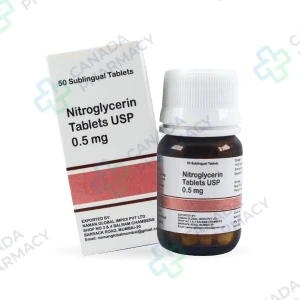
Nitroglycerin
Price range: $ 21,00 through $ 526,00
Nitroglycerin is a highly effective medication primarily used to prevent and treat sudden chest pain known as angina. It works by relaxing and widening the blood vessels, which allows blood to flow more easily to the heart muscle. This process helps reduce the heart’s workload and ensures it receives the necessary oxygen during physical activity or stress. The medication is specifically designed for the rapid relief of acute angina attacks or for the prevention of symptoms before engaging in physical exertion. Available in various convenient forms, this treatment provides dependable support for individuals managing chronic coronary artery disease.
Active substance: Nitroglycerin
Delivery: 5–21 days (depending on the shipping method)
Extra 10% discount with coupon: IT4K6SVM
Each dosage option has its own packaging choices.
Description
Nitroglycerin belongs to a class of cardiovascular medications known as organic nitrates. It is an FDA-approved prescription medication primarily used for the prompt relief of sudden angina pectoris (chest pain) attacks and for the ongoing prevention of angina caused by coronary artery disease. Because nitroglycerin exerts potent, rapid effects on the vascular system, it must be administered strictly under the guidance and supervision of a licensed healthcare professional.
This drug is available in several distinct formulation types, including sublingual tablets, sublingual sprays, transdermal patches, topical ointments, and intravenous solutions. The exact dosing regimen and route of administration depend on whether the drug is prescribed for immediate acute treatment or daily prophylactic care. Federal law restricts this drug to sale by or on the order of a licensed healthcare provider in the United States.
| Attribute | Details |
|---|---|
| Active Ingredient | Nitroglycerin |
| Therapeutic Class | Vasodilators / Organic Nitrates |
| Prescription Status | Prescription Only (Rx) |
| Common Dosage Forms | Sublingual tablets, sublingual spray, transdermal patch, ointment |
| Primary Purpose | Acute relief and prophylaxis of angina pectoris |
| Route of Administration | Sublingual, transdermal, topical, intravenous |
| Storage Requirements | Controlled room temperature (68°F–77°F), original glass container |
Safety Profile and Administration Guidelines
Important precautions
Warning: Nitroglycerin poses severe physiological risks if used improperly. The primary hazard associated with nitrate therapy is severe, life-threatening hypotension (dangerously low blood pressure). Patients with severe anemia, increased intracranial pressure, myocardial infarction with low filling pressures, or circulatory failure must exercise extreme caution, as nitroglycerin can exacerbate hemodynamic instability. Nitroglycerin therapy requires careful patient selection and monitoring by a physician. A critical clinical concern with daily nitrate administration is nitrate tolerance, wherein the vascular system becomes desensitized to the drug’s therapeutic effects. To prevent tolerance, prescribers typically mandate a daily nitrate-free interval of 10 to 12 hours for long-acting formulations like transdermal patches. Pregnant or nursing individuals should use this medication only if clearly needed and specifically prescribed by a physician.
Red flags
Seek immediate emergency medical attention if your chest pain is not relieved after taking sublingual nitroglycerin as directed. If symptoms persist 5 minutes after administering a single dose during an acute angina attack, call emergency services (911) immediately while continuing treatment up to maximum dosage instructions. Never delay emergency medical evaluation for acute chest discomfort.
| Emergency Indicator | Possible Cause / Recommended Action |
|---|---|
| Unrelieved chest pain after 5 minutes | Possible acute myocardial infarction; call 911 immediately |
| Severe dizziness, fainting, or syncope | Marked drop in blood pressure; lie down and raise legs |
| Swelling of face, lips, tongue, or throat | Severe allergic reaction (anaphylaxis); get immediate emergency care |
| Extreme weakness or bluish lips/skin | Possible methemoglobinemia; seek immediate emergency treatment |
| Irregular or abnormally fast pulse | Reflex tachycardia secondary to arterial dilation; contact provider |
Main uses (Indications): The primary indication for quick-acting nitroglycerin formulations, such as sublingual tablets and sprays, is the acute termination of angina pectoris attacks. These fast-acting forms are also indicated for acute prophylaxis prior to engaging in activities known to precipitate angina episodes, such as heavy physical exertion or high emotional stress. Extended-release formulations, including transdermal patches and topically applied ointments, are indicated strictly for the long-term prevention of angina pectoris caused by coronary artery disease. Fast-acting sublingual nitroglycerin is not intended for routine daily prophylaxis, nor are transdermal patches suitable for the immediate termination of an acute anginal episode. Any off-label application must be explicitly evaluated and managed by a qualified healthcare provider.
Dosing schedule (Dosage and administration): Dosage must be individualized by a licensed healthcare provider based on therapeutic response and blood pressure tolerance. For acute angina attacks, patients are typically instructed to sit down and place one sublingual tablet under the tongue or in the buccal pouch at the first sign of pain. If chest discomfort persists 5 minutes after the first dose, emergency medical services (911) must be called immediately. Additional tablets may be administered every 5 minutes under medical instruction, up to a maximum of 3 tablets within a 15-minute period. For transdermal patches used in angina prophylaxis, a common regimen involves applying one patch daily for 12 to 14 hours, followed by a patch-free period of 10 to 12 hours to maintain drug sensitivity. Do not alter doses or stop therapy abruptly without consulting your physician.
Clinical Characteristics and Usage Information
How the drug works
Nitroglycerin acts directly as a vasodilator on vascular smooth muscle. Once absorbed into the bloodstream, it undergoes metabolic conversion within vascular tissue to form free nitric oxide (NO). Nitric oxide stimulates the enzyme soluble guanylate cyclase, leading to an increase in intracellular concentrations of cyclic guanosine monophosphate (cGMP). Elevated cGMP results in the dephosphorylation of myosin light chains and the relaxation of vascular smooth muscle cells. This pharmacological action dilates peripheral veins to a greater extent than arteries, significantly reducing venous return to the heart (preload). By decreasing cardiac preload and wall tension, nitroglycerin substantially reduces myocardial oxygen demand. In higher doses, nitroglycerin also dilates major coronary arteries, improving blood flow to ischemic regions of the heart muscle.
What not to combine
Warning: Nitroglycerin exhibits dangerous and potentially fatal interactions with specific drug classes. Concomitant administration of nitroglycerin with phosphodiesterase type 5 (PDE5) inhibitors–including sildenafil, tadalafil, or vardenafil–is strictly contraindicated. Combining these medications can cause an extreme, precipitous drop in blood pressure resulting in syncope, myocardial infarction, or cerebrovascular accidents. Co-administration with soluble guanylate cyclase stimulators, such as riociguat, is likewise prohibited. Caution is required when combining nitroglycerin with other antihypertensive drugs, beta-blockers, calcium channel blockers, diuretics, or alcohol, as additive hypotensive effects may occur. Always provide your doctor and pharmacist with a complete list of your current prescription and over-the-counter medications.
What happens in the body (Pharmacokinetics): The absorption and distribution of nitroglycerin depend directly on the route of administration. Sublingual administration allows rapid absorption into systemic circulation through the mucous membranes of the mouth, completely bypassing initial hepatic first-pass metabolism. The onset of action for sublingual tablets typically occurs within 1 to 3 minutes, achieving peak plasma concentration almost immediately. Nitroglycerin has an exceptionally short elimination half-life, ranging from 1 to 4 minutes. It undergoes rapid and extensive metabolic breakdown in the liver and red blood cells by the enzyme glutathione-organic nitrate reductase, producing dinitrate and mononitrate metabolites with significantly weaker vasodilatory potency. The resulting inactive metabolites are excreted primarily via the kidneys in urine.
What side effects may occur: The most frequent adverse reaction to nitroglycerin is a throbbing headache, caused by the dilation of cerebral blood vessels. These headaches often decrease in intensity after several days of continued therapy. Other common side effects include orthostatic hypotension (a sudden drop in blood pressure upon standing), lightheadedness, dizziness, facial flushing, and generalized weakness. Some patients experience reflex tachycardia (an elevated heart rate) as the body attempts to compensate for lowered systemic blood pressure. Less common but severe adverse reactions include severe syncope, allergic contact dermatitis (from transdermal patches), and methemoglobinemia. Report any persistent or severe side effects to your healthcare provider immediately.
First days of treatment: When starting nitroglycerin, patients frequently experience a warm flushing sensation or a brief tingling sensation under the tongue following sublingual administration. Mild to moderate headaches are extremely common during the initial days of treatment as your cardiovascular system adjusts to systemic vasodilation. To reduce the risk of dizziness, lightheadedness, and falls caused by sudden drops in blood pressure, sit down before taking a sublingual dose and rise slowly from lying or sitting positions. Patients using transdermal patches should monitor their skin for redness or irritation at the application site.
Practical tips: Always carry your fast-acting sublingual tablets or spray with you if they are prescribed for acute chest pain. Sit down immediately before taking sublingual nitroglycerin, as rapid blood pressure drops can cause sudden lightheadedness or fainting. Do not chew, crush, or swallow sublingual tablets; they must dissolve completely under the tongue to ensure rapid absorption into the bloodstream. When applying transdermal patches, choose a clean, dry, hairless area of skin on the upper arm or chest, rotating application sites daily to minimize skin irritation.
Storage and expiration: Sublingual nitroglycerin tablets require strict storage conditions to maintain chemical stability and potency. Keep sublingual tablets in their original amber glass bottle with the metal cap tightly closed; never transfer them to plastic pill boxes or other containers, as the active medication can evaporate or absorb into plastic materials. Store at controlled room temperature between 68°F and 77°F (20°C to 25°C), away from excess moisture, heat, and direct light. Check expiration dates regularly, and replace opened sublingual tablet containers according to your pharmacist’s or package instructions.
Common questions
What should I do if my chest pain does not go away after taking nitroglycerin?
If your chest pain is not relieved 5 minutes after taking one sublingual tablet or spray, call 911 immediately. Do not drive yourself to the emergency room. You may take a second or third dose 5 minutes apart while waiting for emergency responders, but only as directed by your physician and up to a maximum of 3 doses in 15 minutes.
Can I drink alcohol while taking nitroglycerin?
No. Alcohol should be strictly avoided while taking nitroglycerin. Combining alcohol with nitrates can cause additive vasodilation, resulting in severe hypotension, profound dizziness, confusion, and fainting.
Why do I need to take off my nitroglycerin patch at night?
Removing your nitrogermal patch for 10 to 12 hours each day creates a essential “nitrate-free interval.” Continuous 24-hour exposure to nitrates causes the body to develop tolerance, rendering the medication ineffective for preventing angina attacks.
Is it safe to drive after taking sublingual nitroglycerin?
You should avoid driving or operating machinery immediately after taking sublingual nitroglycerin. The drug rapidly lowers blood pressure, which can cause sudden dizziness, lightheadedness, or fainting that impairs your physical ability to drive safely.
Can I swallow sublingual nitroglycerin tablets with water?
No. Sublingual tablets must not be swallowed. Swallowing the tablet exposes nitroglycerin to stomach acid and extensive liver metabolism, which destroys most of the active drug before it can reach the heart, rendering it ineffective for acute relief.
In accordance with FDA requirements.
The information presented here is not a substitute for professional medical advice. Always consult your healthcare provider before starting or changing any treatment.
Additional information
| Dosage |
0.5 mg ,2.5mg ,6.5mg |
|---|---|
| Package |
25 caps ,30 caps ,50 caps ,60 caps ,75 caps ,90 caps ,120 caps ,180 caps ,270 caps ,360 caps |
| Ενεργός Ουσία |
Related products
Altace
Price range: $ 40,00 through $ 322,00
Active substance: Ramipril
More Details
This product has multiple variants. The options may be chosen on the product page
Aquazide
Price range: $ 18,00 through $ 30,00
Active substance: hydrochlorothiazide
More Details
This product has multiple variants. The options may be chosen on the product page
Arjuna
Price range: $ 63,00 through $ 72,00
Active substance: Arjuna (Terminalia arjuna) bark extract
More Details
This product has multiple variants. The options may be chosen on the product page
Avalide
Price range: $ 66,00 through $ 333,00
Active substance: Irbesartan
More Details
This product has multiple variants. The options may be chosen on the product page
Calan
Price range: $ 46,00 through $ 242,00
Active substance: Verapamil
More Details
This product has multiple variants. The options may be chosen on the product page
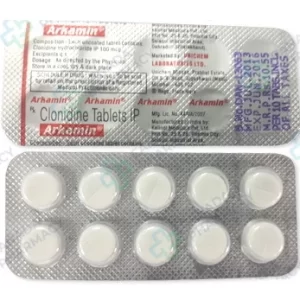
Clonidine
Price range: $ 40,00 through $ 95,00
Active substance: clonidine
More Details
This product has multiple variants. The options may be chosen on the product page
Combipres
Price range: $ 50,00 through $ 202,00
Active substance: chlorthalidone, clonidine hydrochloride
More Details
This product has multiple variants. The options may be chosen on the product page
Doxazosin
Price range: $ 42,00 through $ 332,00
Active substance: Doxazosin
More Details
This product has multiple variants. The options may be chosen on the product page