

-62%

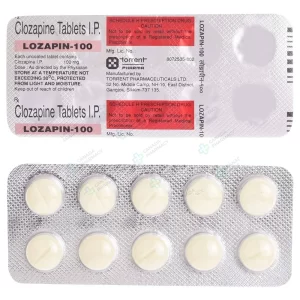
Clozapine
Price range: $ 19,00 through $ 171,00
Co-Amoxiclav
Price range: $ 52,00 through $ 396,00
Clozaril
Price range: $ 45,00 through $ 129,00
Clozaril is an atypical antipsychotic medication primarily used to treat patients with severe schizophrenia who have not responded well to other standard treatments. It is also indicated to reduce the risk of recurrent suicidal behavior in individuals diagnosed with schizophrenia or schizoaffective disorder. By balancing specific natural substances in the brain, this medication helps manage complex psychological symptoms and improves overall quality of life. Clinical studies have shown its effectiveness in stabilizing mood and reducing hallucinations or delusions in treatment-resistant cases. This specialized therapy offers a vital option for managing chronic mental health conditions when conventional antipsychotic options prove insufficient.
Active substance: Clozapine
Delivery: 5–21 days (depending on the shipping method)
Extra 10% discount with coupon: IT4K6SVM
Each dosage option has its own packaging choices.
Description
Clozaril should only be taken under strict medical supervision. It is an oral prescription medication indicated primarily for adults with treatment-resistant schizophrenia who have not responded adequately to standard antipsychotic therapies. Additionally, it is FDA-approved to reduce the risk of recurrent suicidal behavior in individuals diagnosed with schizophrenia or schizoaffective disorder.
Due to potentially life-threatening risks–most notably severe neutropenia–Clozaril is available in the United States exclusively through a restricted distribution program called the Clozapine Risk Evaluation and Mitigation Strategy (REMS). Patients prescribed this medication must undergo mandatory, regular blood monitoring of their absolute neutrophil count (ANC) prior to dispensing each prescription refill.
Critical Safety Profile & Red Flags
Safety Profile
Clozaril carries serious boxed warnings issued by the U.S. Food and Drug Administration (FDA). The primary risk associated with treatment is severe neutropenia, a dangerous reduction in white blood cells that can lead to severe, life-threatening infections. Prescribers must confirm that a patient’s absolute neutrophil count (ANC) is at least 1500/µL (or 1000/µL for individuals with documented benign ethnic neutropenia) before initiating therapy. ANC monitoring must continue throughout treatment and after discontinuation according to REMS guidelines.
In addition to neutropenia, Clozaril is associated with an elevated risk of myocarditis and cardiomyopathy, which can be fatal. Severe orthostatic hypotension, bradycardia, and syncope may occur, particularly during initial dose titration. Clozaril also lowers the seizure threshold in a dose-dependent manner. Elderly patients with dementia-related psychosis treated with antipsychotic medications face an increased risk of death; Clozaril is not approved for the treatment of patients with dementia-related psychosis.
Red Flags
Patients and caregivers must remain vigilant for warning signs that require urgent clinical evaluation. Any fever, sore throat, chills, or flu-like symptoms can signal an underlying infection caused by low white blood cell levels and must be reported immediately. Symptoms such as chest pain, rapid heart rate, difficulty breathing, or unexplained fatigue warrant immediate cardiac assessment. Severe constipation, abdominal pain, or bloating are critical warning signs of gastrointestinal hypomotility, which can lead to intestinal obstruction or bowel ischemia if left unmanaged.
| Symptom / Warning Sign | Potential Medical Risk | Required Action |
|---|---|---|
| Fever, sore throat, or flu-like symptoms | Severe neutropenia / Agranulocytosis | Seek emergency medical care; obtain an immediate blood test (ANC). |
| Chest pain, shortness of breath, palpitations | Myocarditis or Cardiomyopathy | Seek immediate emergency cardiac evaluation. |
| Severe constipation, abdominal pain, vomiting | Gastrointestinal hypomotility / Intestinal obstruction | Contact a healthcare provider immediately before taking another dose. |
| Lightheadedness, fainting upon standing | Severe orthostatic hypotension | Sit or lie down; contact your physician for dose evaluation. |
| Uncontrolled muscle jerking or loss of consciousness | Seizures | Seek emergency medical attention immediately. |
Clinical Overview & Pharmacological Details
How the Drug Works
Clozaril contains clozapine, a dibenzodiazepine derivative classified as an atypical (second-generation) antipsychotic. Unlike classical dopamine-receptor antagonists, Clozaril displays relatively weak binding affinity for dopamine D2 receptors in the limbic and striatal regions of the brain. Instead, it exhibits potent antagonist activity at serotonin 5-HT2A receptors, along with high affinity for dopamine D4, alpha-1 adrenergic, histamine H1, and muscarinic M1 receptors. This complex neurochemical interaction produces significant therapeutic efficacy in treatment-resistant symptoms while minimizing extrapyramidal side effects such as tardive dyskinesia.
What It’s Used For
The primary clinical indication for Clozaril is the management of severely ill patients with schizophrenia who fail to respond adequately to standard antipsychotic drug treatments. It is also indicated to reduce the risk of recurrent suicidal behavior in patients with schizophrenia or schizoaffective disorder. Any other application–such as treatment of severe refractory bipolar disorder or psychosis related to Parkinson’s disease–is considered an off-label use in the United States and requires thorough risk-benefit analysis by a licensed provider.
Dosing Schedule
Treatment with Clozaril must strictly follow a cautious dose-titration schedule to reduce the risk of severe orthostatic hypotension, cardiac arrest, and seizures. Initial therapy generally starts at 12.5 mg once or twice daily on Day 1. The daily dose may then be increased by 25 mg to 50 mg per day, if tolerated, until a target dose of 300 mg to 450 mg daily is achieved (divided into multiple doses). The maximum approved daily dosage is 900 mg. Dosages are adjusted individually based on patient response, tolerance, and absolute neutrophil counts.
What Happens in the Body
Following oral administration, Clozaril is readily absorbed, but its mean absolute bioavailability ranges between 50% and 55% due to first-pass liver metabolism. Peak plasma concentrations typically occur within 1 to 4 hours post-dose. The drug is highly bound to plasma proteins (approximately 97%). Clozaril is extensively metabolized in the liver, primarily via the cytochrome P450 enzyme CYP1A2, with secondary pathways involving CYP2D6 and CYP3A4. Its principal active metabolite, N-desmethylclozapine (norclozapine), possesses limited clinical activity. The mean elimination half-life of clozapine is approximately 12 hours under steady-state conditions, though it varies widely across individuals.
Drug Compatibility and Dietary Precautions
What Not to Combine
Clozaril has numerous dangerous drug interactions. Concomitant administration of strong CYP1A2 inhibitors (such as fluvoxamine, ciprofloxacin, or enoxacin) significantly increases clozapine serum concentrations, raising the risk of severe toxicity and seizures. Conversely, CYP1A2 inducers (such as carbamazepine, rifampin, or tobacco smoke) increase Clozaril clearance, leading to therapeutic failure. Combining Clozaril with benzodiazepines or other CNS depressants increases the risk of severe respiratory depression, profound hypotension, and cardiac arrest. Drugs known to suppress bone marrow function must not be co-administered with Clozaril due to cumulative risk of severe neutropenia. Additionally, combining Clozaril with anticholinergic medications markedly increases the risk of severe constipation, paralytic ileus, and urinary retention.
What to Avoid While Taking It
Patients treated with Clozaril must strictly avoid alcohol consumption, as alcohol enhances central nervous system depression, sedation, and motor impairment. Patients should maintain a consistent intake of caffeine-containing beverages, as significant increases or decreases in caffeine intake alter CYP1A2 activity and clozapine blood levels. Smoking habits also directly affect drug metabolism; patients who plan to quit or start smoking while on Clozaril must inform their physician, as dosage adjustments may be necessary to maintain safe and effective drug levels.
Patient Guidance & Daily Management
Adverse Reactions
The most common side effects observed during Clozaril therapy include severe drowsiness, sedation, dizziness, excessive salivation (sialorrhea), tachycardia, constipation, and weight gain. Sialorrhea is particularly prominent at night and can be managed through behavioral or clinical interventions. Clozaril therapy is also associated with significant metabolic alterations, including hyperglycemia, dyslipidemia, and weight gain, requiring baseline and periodic metabolic screening. Neurological adverse events, including seizures, occur more frequently at daily doses exceeding 600 mg.
If You Skip a Dose
If a single dose of Clozaril is missed, it should be taken as soon as remembered, provided it is not close to the next scheduled dose. Never double up on doses. However, if treatment is interrupted for 48 hours or longer, patients must not resume their standard dose. Stopping Clozaril for more than two days increases the risk of severe hypotension, bradycardia, and seizures upon re-exposure. In this scenario, patients must contact their prescriber immediately to restart therapy at 12.5 mg once or twice daily and re-titrate the dose safely.
Practical Tips
Patients taking Clozaril should adhere strictly to blood monitoring schedules mandated by the Clozapine REMS program to avoid disruption in medication dispensing. To minimize orthostatic dizziness, rise slowly when moving from a sitting or lying position. Ensure adequate hydration and high-fiber intake to prevent constipation. If excessive nocturnal salivation occurs, placing a towel over the pillow can improve daily comfort, while persistent symptoms should be discussed with a doctor.
| Property | Detail |
|---|---|
| Active Ingredient | Clozapine |
| Prescription Status | Prescription-Only (Rx) – Restricted via Clozapine REMS |
| Route of Administration | Oral (Tablets, Orally Disintegrating Tablets) |
| Primary Pharmacologic Class | Atypical Antipsychotic (Dibenzodiazepine derivative) |
| Typical Target Dose Range | 300 mg to 450 mg daily (Max: 900 mg daily) |
| Elimination Half-Life | Approximately 12 hours (range: 4 to 66 hours) |
| Required Blood Test | Absolute Neutrophil Count (ANC) |
Common Questions About Clozaril Therapy
Why is absolute neutrophil count (ANC) blood testing mandatory for Clozaril refills?
Clozaril carries a severe risk of agranulocytosis (a sudden, life-threatening drop in white blood cells). Routine blood monitoring through the FDA-mandated Clozapine REMS program ensures that your absolute neutrophil count remains at a safe level. If your ANC drops below safety thresholds, your doctor will adjust or pause your treatment to protect you from overwhelming infection.
What should I do if I forget to take Clozaril for more than two full days?
You must not take your regular dose if you have missed Clozaril for 48 hours or more. Restarting at your normal dose can cause severe low blood pressure, cardiac collapse, or seizures. Contact your healthcare provider immediately; they will instruct you to restart treatment at a low dose (typically 12.5 mg) and gradually titrate back up to your target level.
How does smoking cigarettes affect Clozaril blood levels?
Tobacco smoke contains chemicals that induce the liver enzyme CYP1A2, which breaks down clozapine in your body. Smoking reduces the amount of active drug in your bloodstream. If you stop smoking, clozapine levels can rise significantly, increasing the risk of toxic side effects. Always notify your doctor before changing your smoking habits.
Why is severe constipation considered a medical emergency while taking Clozaril?
Clozaril has strong anticholinergic properties that slow down gastrointestinal motility. In severe cases, this can lead to intestinal obstruction, fecal impaction, paralytic ileus, and bowel necrosis, which can be fatal. If you experience persistent constipation, abdominal swelling, or severe abdominal pain, seek medical attention right away.
Can Clozaril be stopped abruptly if I feel better?
No. Never stop taking Clozaril suddenly unless instructed by your doctor due to severe laboratory abnormalities. Abrupt discontinuation can lead to severe withdrawal symptoms, rapid psychotic relapse, and rebound cholinergic reactions (such as extreme sweating, headache, nausea, and vomiting). Discontinuation must be done gradually under professional supervision.
Important Medical Disclaimer
In accordance with FDA requirements.
This material is educational. Only a licensed prescriber can determine whether a medication is appropriate for you.
Additional information
| Dosage |
50mg ,100mg |
|---|---|
| Package |
60 pills ,90 pills ,120 pills ,180 pills ,270 pills ,360 pills |
| Ενεργός Ουσία |
Related products

Abilify
Price range: $ 45,00 through $ 413,00
Active substance: Aripiprazole
More Details
This product has multiple variants. The options may be chosen on the product page

Amitriptyline
Price range: $ 41,00 through $ 114,00
Active substance: amitriptyline
More Details
This product has multiple variants. The options may be chosen on the product page

Asendin
Price range: $ 41,00 through $ 369,00
Active substance: Amoxapine
More Details
This product has multiple variants. The options may be chosen on the product page

Celexa
Price range: $ 7,00 through $ 193,00
Active substance: Citalopram
More Details
This product has multiple variants. The options may be chosen on the product page

Desyrel
Price range: $ 41,00 through $ 206,00
Active substance: Trazodone
More Details
This product has multiple variants. The options may be chosen on the product page
Endep
Price range: $ 22,00 through $ 398,00
Active substance: amitriptyline
More Details
This product has multiple variants. The options may be chosen on the product page

Geodon
Price range: $ 46,00 through $ 418,00
Active substance: Ziprasidone
More Details
This product has multiple variants. The options may be chosen on the product page

Lithium
Price range: $ 16,00 through $ 139,00
Active substance: Lithium
More Details
This product has multiple variants. The options may be chosen on the product page