

-41%

Lady Era
Price range: $ 51,00 through $ 382,00

Lamictal Dispersible
Price range: $ 14,00 through $ 61,00
Lamictal
Price range: $ 47,00 through $ 491,00
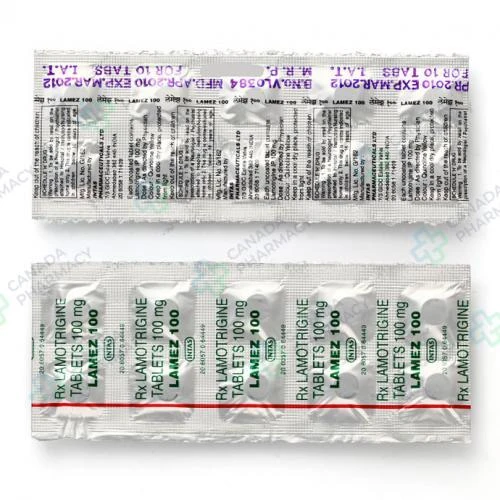
Lamictal is a versatile medication primarily utilized as an effective anticonvulsant and mood stabilizer. It is widely indicated for the long-term management of various types of seizures in patients diagnosed with epilepsy. Furthermore, this treatment is approved for the maintenance therapy of Bipolar I Disorder to help delay the occurrence of significant mood episodes. By stabilizing electrical activity in the brain, Lamictal assists individuals in maintaining emotional balance and neurological health. This medication remains a trusted choice for those seeking to enhance their daily stability and overall well-being.
Active substance: Lamotrigine
Delivery: 5–21 days (depending on the shipping method)
Extra 10% discount with coupon: IT4K6SVM
Each dosage option has its own packaging choices.
Description
Lamictal belongs to a group of medicines called antiepileptic drugs, also classified as anticonvulsants or mood stabilizers. In the United States, it is a prescription medication regulated under federal law and must be used strictly in accordance with a licensed healthcare provider’s directions.
This agent is FDA-approved for specific seizure disorders and for maintenance treatment in bipolar I disorder. Because inappropriate dosing or rapid escalation can increase the risk of severe dermatologic reactions, treatment requires careful titration under direct medical supervision.
Clinical Overview and Safety Profile
What it’s used for
Lamictal (lamotrigine) is indicated as adjunctive or monotherapy for the treatment of focal seizures (also referred to as partial-onset seizures) and primary generalized tonic-clonic seizures in adult and pediatric patients. It is also approved as adjunctive therapy for seizures associated with Lennox-Gastaut syndrome in patients aged 2 years and older. In psychiatric medicine, Lamictal is FDA-approved for the maintenance treatment of bipolar I disorder to delay the time to occurrence of mood episodes (depression, mania, hypomania, or mixed episodes) in adults 18 years of age and older. Uses such as treatment of acute bipolar depression, unipolar treatment-resistant depression, or neuropathic pain are not FDA-approved and are considered off-label applications requiring careful risk-benefit evaluation by a prescriber.
How the drug works
The precise mechanism by which lamotrigine exerts its therapeutic action in humans has not been fully established. Voltage-gated sodium channels in neuronal membranes are inhibited in a voltage- and use-dependent manner. This action stabilizes presynaptic neuronal membranes and inhibits the pathological release of excitatory neurotransmitters, primarily glutamate and aspartate. Through this voltage-dependent blockade of sodium currents, neuronal hyperexcitability is suppressed, which contributes to its anticonvulsant activity and mood-stabilizing effects in central nervous system pathways.
How it’s absorbed and eliminated
Following oral administration, lamotrigine is rapidly and completely absorbed from the gastrointestinal tract, reaching peak plasma concentrations within 1 to 3 hours. Absolute bioavailability is approximately 98%. Plasma protein binding is approximately 55%, meaning displacement interactions with other highly bound drugs are unlikely. The drug is extensively metabolized in the liver, primarily via glucuronidation mediated by the UGT1A4 enzyme system. Glucuronide metabolites are excreted predominantly in the urine. In healthy adults taking lamotrigine alone, the elimination half-life is approximately 30 hours. However, co-administration with enzyme-inducing or enzyme-inhibiting drugs substantially alters this half-life, ranging from 15 hours to over 70 hours.
Indications and Dosing Concepts
Dosing schedule
Dosing schedules for Lamictal must be strictly individualized based on the patient’s age, specific medical condition, and concurrent administration of other medications. Initial dosing starts low and is escalated slowly over several weeks. For example, when administered alongside metabolic inhibitors like valproate, initial doses are significantly lower than when administered alone. Conversely, concurrent use of liver enzyme inducers requires higher initial and maintenance doses. Tablets must be swallowed whole, orally disintegrating tablets must dissolve on the tongue, and chewable dispersible tablets may be swallowed whole, chewed, or dispersed in liquid. Never alter the prescribed titration schedule without explicit medical instruction.
Adverse reactions
The side effect profile of Lamictal ranges from mild transient symptoms to severe adverse events. Common adverse reactions reported in clinical trials include dizziness, headache, diplopia (double vision), ataxia, somnolence, nausea, vomiting, blurred vision, and fatigue. Insomnia and rhinitis have also been observed. In psychiatric trials for bipolar disorder, nausea, dry mouth, and tremor were frequently reported. While mild cutaneous reactions such as benign rash may occur, any new rash must be evaluated immediately by a physician due to the risk of life-threatening dermatologic events.
Warnings and Interactions
Important precautions
Lamictal carries a Boxed Warning regarding severe, potentially life-threatening skin rashes, including Stevens-Johnson syndrome (SJS), toxic epidermal necrolysis (TEN), and rash-related death. The risk of severe rash is higher in pediatric patients than in adults, as well as in patients receiving concurrent valproic acid derivatives, those exceeding recommended initial starting doses, or those undergoing rapid dose escalation. Lamictal should be discontinued at the first sign of rash unless the rash is clearly not drug-related. Additional warnings include the risk of hemophagocytic lymphohistiocytosis (HLH), severe immune system reaction, cardiac rhythm abnormalities in patients with structural heart disease, and suicidal thoughts or behaviors common to the antiepileptic drug class.
Red flags
Emergency medical attention must be sought immediately if any of the following symptoms develop during treatment: severe skin rash, hives, or skin peeling; blistering inside the mouth, nose, eyes, or genitals; swelling of the face, lips, throat, or tongue; difficulty breathing or swallowing; fever combined with swollen lymph glands; yellowing of the skin or eyes (jaundice); unusual bruising or bleeding; chest pain or irregular heartbeat; or sudden worsening of depression, anxiety, or suicidal ideation.
What not to combine
Lamictal exhibits complex pharmacokinetic interactions with numerous pharmacological agents. Valproate (valproic acid, divalproex sodium) significantly inhibits lamotrigine glucuronidation, reducing its clearance and more than doubling its plasma half-life; this requires a reduced dosing protocol. Conversely, enzyme-inducing drugs such as carbamazepine, phenytoin, phenobarbital, and primidone accelerate lamotrigine clearance and decrease its half-life by roughly half, necessitating higher doses. Estrogen-containing oral contraceptives and hormone replacement therapies increase lamotrigine clearance, leading to reduced serum concentrations; starting or stopping estrogen products may require dose adjustments. Alcohol consumption may compound central nervous system depression, such as drowsiness and dizziness.
Special Populations and Practical Guidelines
If you skip a dose
If a dose is missed, it should be taken as soon as remembered unless it is almost time for the next scheduled dose. Patients should never double up on doses to make up for a missed one. If treatment with Lamictal is interrupted for more than a few consecutive days, patients must contact their healthcare provider before restarting, as re-titration starting from the lowest initial dose may be necessary to minimize the risk of severe rash.
Pregnancy, breastfeeding, and other groups
Physicians must carefully weigh risks and benefits when prescribing Lamictal to pregnant women. Physiological changes during pregnancy can increase lamotrigine metabolism, potentially requiring dosage adjustments to maintain seizure control. A pregnancy registry is available in the United States to monitor maternal and fetal outcomes. Lamotrigine passes into breast milk and may cause adverse effects in nursing infants, such as drowsiness or poor feeding; infant monitoring is recommended. In pediatric patients under 2 years of age, safety and effectiveness have not been established. Elderly patients generally require cautious dose selection, starting at the lower end of the dosing range due to decreased hepatic or renal function.
Day-to-day use
Daily management with Lamictal involves maintaining a consistent medication schedule. Tablets should be stored at controlled room temperature between 68°F and 77°F (20°C to 25°C), protected from light and moisture. Patients should avoid activities requiring high mental alertness, such as driving or operating heavy machinery, until they know how the medication affects them. It is recommended to keep a log of seizure activity or mood stability markers to review during routine medical follow-ups.
Key Information Overview
| Parameter | Details |
|---|---|
| Active Ingredient | Lamotrigine |
| Therapeutic Class | Anticonvulsant / Mood Stabilizer |
| Prescription Status | Prescription Only (Rx) |
| Primary Route | Oral |
| Elimination Half-Life | Approximately 30 hours (monotherapy; variable with co-medications) |
| Major Risk Warning | Severe cutaneous adverse reactions (Stevens-Johnson syndrome, TEN) |
| Storage Conditions | 68°F to 77°F (20°C to 25°C); protect from light and moisture |
Frequently Asked Questions
What should I do if I notice a skin rash after starting Lamictal?
Any skin rash that develops during Lamictal therapy must be evaluated by a healthcare professional immediately. Because it is impossible to reliably predict whether a mild rash will progress into a severe dermatologic condition like Stevens-Johnson syndrome, prescribers typically instruct patients to stop taking the drug at the first sign of a rash unless it is conclusively unrelated to the medication.
Can I stop taking Lamictal suddenly if I feel fine?
No. Abrupt discontinuation of any antiepileptic drug, including Lamictal, can precipitate rebound seizures or a sudden worsening of mood symptoms. When stopping or changing therapy is clinically indicated, the dose is gradually reduced (tapered) over at least two weeks under the direction of a physician.
How do birth control pills interact with Lamictal?
Combination oral contraceptives containing estrogen increase the metabolism of lamotrigine, significantly lowering its concentration in the blood. This can lead to a loss of seizure control or mood stability. Conversely, during the pill-free week, lamotrigine levels may rise, increasing the risk of side effects. Dosage adjustments are often necessary when starting or stopping estrogen-containing contraceptives.
What happens if I stop taking Lamictal for several days and need to restart?
If you miss taking Lamictal for more than a few days, do not simply resume your maintenance dose. Restarting at a high dose increases the risk of developing a severe rash. Contact your healthcare provider immediately, as you will likely need to restart treatment at the lowest initial dose and slowly titrate back up.
Is it safe to consume alcohol while taking Lamictal?
Combining alcohol with Lamictal is generally discouraged. Alcohol can potentiate the central nervous system depressant effects of lamotrigine, leading to severe drowsiness, impaired motor coordination, dizziness, and compromised cognitive performance.
In accordance with FDA requirements.
The information presented here is not a substitute for professional medical advice.
Additional information
| Dosage |
25mg ,50mg ,100mg ,200mg |
|---|---|
| Package |
30 pills ,60 pills ,90 pills ,120 pills ,180 pills ,270 pills ,360 pills |
| Ενεργός Ουσία |
Related products

Cerecetam
Price range: $ 58,00 through $ 255,00
Active substance: Piracetam
More Details
This product has multiple variants. The options may be chosen on the product page

Depakote
Price range: $ 32,00 through $ 267,00
Active substance: Divalproex
More Details
This product has multiple variants. The options may be chosen on the product page

Dilantin
Price range: $ 43,00 through $ 171,00
Active substance: Phenytoin
More Details
This product has multiple variants. The options may be chosen on the product page

Melatonin
Anti-Inflammatories, AntiConvulsants, AntiParasitics, Cancer, Dementias, HIV, Migraine, Osteoporosis, Respiratory Tract
Price range: $ 46,00 through $ 201,00
Active substance: Melatonin
More Details
This product has multiple variants. The options may be chosen on the product page

Mysoline
Price range: $ 41,00 through $ 275,00
Active substance: Primidone
More Details
This product has multiple variants. The options may be chosen on the product page

Neurontin
Price range: $ 40,00 through $ 650,00
Active substance: gabapentin
More Details
This product has multiple variants. The options may be chosen on the product page

Topamax
Price range: $ 39,00 through $ 584,00
Active substance: Topiramate
More Details
This product has multiple variants. The options may be chosen on the product page

Valparin
Price range: $ 100,00 through $ 273,00
Active substance: Valproic Acid
More Details
This product has multiple variants. The options may be chosen on the product page