

-74%

Vantin
Price range: $ 81,00 through $ 771,00
Vasotec
Price range: $ 13,00 through $ 207,00
Varnitrip
Price range: $ 55,00 through $ 900,00
Varnitrip is a specialized medication designed to support digestive health and protect the gastrointestinal tract. It is primarily used to prevent the development of gastric ulcers in individuals who take nonsteroidal anti-inflammatory drugs (NSAIDs) for chronic conditions. By reducing the amount of acid produced in the stomach, this treatment helps maintain a healthy and balanced digestive environment. The active formula works effectively to strengthen the stomach’s natural protective barriers against potential irritation and damage. Incorporating Varnitrip into a wellness plan allows for the safer management of long-term pain relief by significantly lowering the risk of stomach complications.
Active substance: Varenicline
Delivery: 5–21 days (depending on the shipping method)
Extra 10% discount with coupon: IT4K6SVM
Each dosage option has its own packaging choices.
Description
Varnitrip belongs to a class of medications known as selective neuronal nicotinic acetylcholine receptor partial agonists. It is dispensed in accordance with applicable federal and state regulations as a prescription therapy intended to assist adult patients in achieving smoking cessation. By selectively targeting specific neuroreceptors in the central nervous system, this pharmacological agent reduces both the urge to smoke and the rewarding sensations associated with tobacco use.
Clinical management with this medication requires a structured dose titration schedule and ongoing medical oversight to monitor therapeutic progress and safety. Patients should consult a licensed healthcare provider to determine whether this treatment is suitable for their individual health profile and tobacco cessation strategy.
| Active ingredient | Varenicline |
| Dosage form | Oral tablets |
| Route of administration | Oral |
| Primary purpose | Smoking cessation aid |
| Prescription status | Prescription (Rx) |
| Storage | Store at 68°F to 77°F (20°C to 25°C); excursions permitted to 59°F–86°F (15°C–30°C) |
Clinical Profile and Pharmacological Overview
How the drug works and pharmacokinetics
How the drug works
Varnitrip binds with high affinity and selectivity to alpha-4 beta-2 neuronal nicotinic acetylcholine receptor subtypes in the brain. As a partial agonist, it produces a dual response: it produces moderate dopamine release to alleviate nicotine withdrawal symptoms and intense cravings, while simultaneously acting as an antagonist by blocking nicotine from binding to these same receptors. Consequently, if a patient smokes a cigarette during treatment, the receptor-mediated reward mechanism is significantly diminished. This dual activity supports abstinence by decreasing the reinforcing effects of inhaled nicotine throughout the treatment cycle.
How it’s absorbed and eliminated
Following oral administration, the active drug substance is well absorbed, achieving peak plasma concentrations within 3 to 4 hours. Oral bioavailability is high and is not significantly affected by co-administration with food. The drug exhibits minimal hepatic metabolism, with approximately 92% of the dose excreted unchanged in the urine via active tubular secretion and glomerular filtration. The elimination half-life is approximately 24 hours, allowing steady-state plasma levels to be attained within 4 days of continuous daily administration. In patients with severe renal impairment, drug clearance is substantially reduced, requiring targeted dosage adjustments.
Main uses and dosing schedule
Main uses
Varnitrip is indicated as an aid to smoking cessation treatment in adult patients aged 18 years and older. The primary clinical goal is to assist motivated individuals in attaining sustained tobacco abstinence. Treatment is typically initiated 1 to 2 weeks prior to the patient’s selected target quit date, ensuring therapeutic plasma concentrations are established before tobacco intake ceases. Any use outside FDA-approved smoking cessation indications is considered off-label and must be evaluated individually by a qualified prescriber.
Dosing schedule
Dosing begins with a initial titration period designed to reduce gastrointestinal side effects. For days 1 through 3, the standard dose is 0.5 mg taken once daily. On days 4 through 7, the dosage increases to 0.5 mg taken twice daily. From day 8 through the end of the 12-week treatment course, the recommended maintenance dosage is 1 mg administered twice daily. Tablets should be swallowed whole with water after meals. Patients who successfully stop smoking by week 12 may undergo an additional 12-week maintenance course under medical supervision to lessen the likelihood of relapse.
Patient Care and Safety Guidelines
Important precautions and adverse reactions
Important precautions
Healthcare providers must monitor patients for serious neuropsychiatric events during treatment. Post-marketing surveillance reports indicate that some patients taking nicotine receptor partial agonists experience behavioral changes, hostility, agitation, depressed mood, and suicidal ideation or behavior. Patients with a history of psychiatric illness require comprehensive baseline assessment and close clinical oversight. Additionally, patients with underlying cardiovascular disease should be monitored for new or worsening cardiovascular symptoms, as minor increases in non-fatal cardiovascular events have been documented in clinical trials. Patients experiencing marked changes in mood or behavior should discontinue treatment and contact their physician immediately.
Adverse reactions
Nausea is the most commonly reported adverse event associated with therapy, occurring primarily during the initial weeks of treatment. Consuming each tablet with food and a full glass of water helps mitigate gastrointestinal distress. Other reported side effects include insomnia, abnormal or vivid dreams, headache, flatulence, constipation, and dry mouth. Severe cutaneous adverse reactions, including Stevens-Johnson syndrome and erythema multiforme, have been reported rarely. Development of a rash, skin blistering, or mucosal lesions requires immediate treatment cessation and emergency medical evaluation.
Drug interactions and safety guidelines
Compatibility with other medicines
Co-administration of Varnitrip with transdermal nicotine replacement therapy (NRT) may lead to an increased incidence of adverse effects, including nausea, headache, vomiting, dizziness, and dyspepsia, due to additive pharmacological actions. Pharmacokinetic interactions with ethanol, warfarin, or digoxin are not clinically significant; however, the physiological changes resulting from smoking cessation itself can alter the metabolism of certain co-administered drugs. For example, cessation of smoking decreases hepatic CYP1A2 activity, which may increase serum concentrations of medications such as theophylline or clozapine, necessitating dosage monitoring by a physician.
Food and alcohol interactions
This medication may be taken with or without food, though taking each dose after a meal reduces the likelihood of stomach upset. Patients should exercise caution regarding alcohol consumption. Reports indicate that some individuals experience increased intoxication, altered behavior, or memory impairment when combining alcohol with this therapy. It is advisable to minimize alcohol intake until the individual’s physiological response to the medication is established.
If you skip a dose
If a dose is missed, it should be taken as soon as remembered. If it is nearly time for the next scheduled dose, the missed tablet should be skipped entirely, and the normal dosing schedule resumed. Patients should not take two doses at the same time to compensate for a missed dose.
Red flags
Immediate medical intervention is required if any of the following severe adverse reactions occur:
- Swelling of the face, mouth, lips, tongue, or throat causing breathing or swallowing difficulty.
- Severe skin reactions, including unexplained rash, skin peeling, or mucosal blisters.
- Sudden changes in mood, severe depression, agitation, aggression, or thoughts of self-harm.
- New or worsening chest pain, pressure, shortness of breath, or irregular heartbeat.
Storage and expiration
Store at controlled room temperature between 68°F and 77°F (20°C to 25°C), with excursions permitted between 59°F and 86°F (15°C to 30°C). Keep the tablets in their original container, tightly closed, and protected from moisture and heat. Keep out of reach of children. Properly discard any medication that is expired or no longer needed according to local regulations.
Common questions
How long before my target quit date should I start taking the medication?
Treatment is generally initiated 1 to 2 weeks before your planned quit date. This allows the medication to reach steady therapeutic levels in your body while you prepare to stop smoking completely.
Does this drug affect the ability to drive or operate machinery?
Dizziness, somnolence, and transient disturbances in concentration have been reported during treatment. Patients should refrain from driving or operating complex machinery until they know how the drug affects their motor skills and alertness.
What should I do if I experience sleep disruptions or vivid dreams?
Insomnia and vivid dreams are recognized side effects. Taking the evening dose earlier in the evening with food or discussing a dose reduction with your healthcare provider can help manage sleep-related disturbances.
Is it necessary to taper the dose when stopping treatment?
While abrupt discontinuation at the end of 12 weeks is standard, some patients experience temporary irritability or increased urges to smoke. Your provider can advise whether a gradual dose reduction is appropriate for your situation.
How does quitting smoking impact my other daily prescription medications?
Chemicals in tobacco smoke accelerate the hepatic breakdown of certain drugs. When you quit smoking, blood levels of medications such as theophylline or insulin may rise, requiring your prescriber to adjust their dosages.
Disclaimers and Regulatory Information
In accordance with FDA requirements.
Information on this page is for reference and does not replace an assessment by a licensed healthcare professional.
Additional information
| Dosage |
0.5mg ,1mg |
|---|---|
| Package |
10 pills ,20 pills ,30 pills ,60 pills ,90 pills ,120 pills ,180 pills ,270 pills ,360 pills |
| Ενεργός Ουσία |
Related products
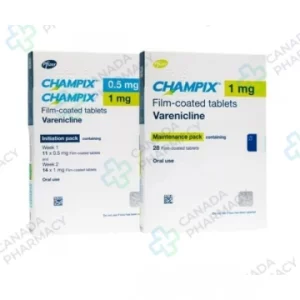
Champix
Price range: $ 144,00 through $ 349,00
Active substance: Varenicline
More Details
This product has multiple variants. The options may be chosen on the product page

Nicotex
Price range: $ 18,00 through $ 51,00
Active substance: nicotine
More Details
This product has multiple variants. The options may be chosen on the product page
Nicotinell
Price range: $ 10,00 through $ 30,00
Active substance: nicotine
More Details
This product has multiple variants. The options may be chosen on the product page
Wellbutrin
Price range: $ 66,00 through $ 627,00
Active substance: Bupropion
More Details
This product has multiple variants. The options may be chosen on the product page
Wellbutrin SR
Price range: $ 62,00 through $ 299,00
Active substance: Bupropion
More Details
This product has multiple variants. The options may be chosen on the product page
Zyban
Price range: $ 40,00 through $ 210,00
Active substance: Bupropion
More Details
This product has multiple variants. The options may be chosen on the product page