

-26%

Bupropion
Price range: $ 41,00 through $ 297,00

Bystolic
Price range: $ 38,00 through $ 275,00
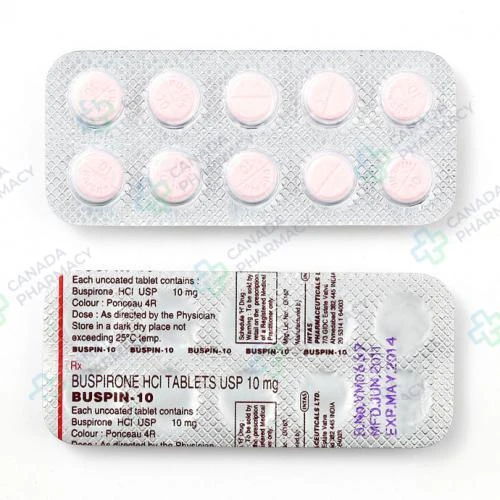
Buspar
Price range: $ 40,00 through $ 118,00
Buspar is a highly effective medication primarily indicated for the long-term management of generalized anxiety disorder. It works by balancing natural neurotransmitters in the brain to alleviate persistent feelings of worry and tension. This treatment is specifically designed to reduce physical symptoms of anxiety, such as restlessness and irritability, without causing significant sedation. Many individuals benefit from its ability to improve daily functioning and promote a more stable emotional state. By targeting the underlying causes of chronic anxiety, Buspar helps patients achieve a calmer and more focused quality of life.
Active substance: Buspirone
Delivery: 5–21 days (depending on the shipping method)
Extra 10% discount with coupon: IT4K6SVM
Each dosage option has its own packaging choices.
Description
Buspar belongs to a group of medicines known as anxiolytics, specifically classified within the azapirone chemical class. It is prescribed under federal regulatory oversight for the management of generalized anxiety disorder (GAD) and the short-term relief of symptoms associated with anxiety. Unlike conventional benzodiazepines, buspirone does not produce significant muscle relaxation or pronounced sedation, nor does it display a recognized potential for physical dependence or abuse.
Understanding the pharmacological profile, dosing schedule, potential interactions, and risk factors associated with Buspar is essential for safe therapeutic management. This reference overview synthesizes established clinical data regarding the oral administration, mechanism of action, and patient monitoring standards for buspirone hydrochloride in the United States.
| Parameter | Specification |
|---|---|
| Active ingredient (INN) | Buspirone hydrochloride |
| Primary purpose | Management of anxiety disorders and short-term anxiety symptom relief |
| Prescription status | Prescription (Rx) |
| Dosage form | Oral tablet |
| Route of administration | Oral |
| Storage | Store at controlled room temperature 20°C to 25°C (68°F to 77°F) |
Clinical Overview and Mechanism
Main uses
Buspar is FDA-approved for the management of generalized anxiety disorder (GAD) and the short-term alleviation of anxiety symptoms. Clinical studies support its efficacy in controlling symptoms such as persistent tension, autonomic hyperactivity, and apprehensive expectation. On one hand, it provides effective relief for chronic generalized anxiety; on the other hand, it is not indicated for anxiety or tension associated with the everyday stress of daily life. Any off-label applications, such as use as an augmenting agent in treatment-resistant major depressive disorder, represent non-FDA-approved indications and must be evaluated strictly on an individual basis by a qualified prescriber.
How the drug works
The exact mechanism of action of buspirone is not fully elucidated, but its therapeutic activity differs fundamentally from classic central nervous system depressants. Buspirone acts as a high-affinity selective partial agonist at presynaptic and postsynaptic serotonin 5-HT1A receptors. Additionally, it exhibits moderate affinity for central dopamine D2 autoreceptors. Unlike barbiturates or benzodiazepines, Buspar does not bind to GABA-A receptors, nor does it directly alter gamma-aminobutyric acid transmission. This distinct receptor affinity profile explains why the medication lacks anticonvulsant, muscle-relaxant, and profound hypnotic properties while effectively modulating serotonergic pathways involved in anxiety.
What you may notice early on
Patients beginning therapy with Buspar should be aware that clinical improvement is typically delayed. Unlike fast-acting sedatives, buspirone does not provide acute, immediate relief upon administration. During the first several days to weeks of treatment, patients may experience mild transient symptoms such as lightheadedness, nausea, or headache while the central nervous system adapts. Therapeutic efficacy generally develops progressively over two to four weeks of continuous daily use. Consequently, the drug cannot be used on an “as-needed” or episodic basis for acute anxiety spikes or sudden panic episodes.
Administration and Pharmacokinetics
Dosing schedule
The initial recommended adult dosage for generalized anxiety disorder is typically 15 mg per day, administered as 7.5 mg twice daily or 5 mg three times daily. Based on clinical response and tolerability, a healthcare provider may increase the daily dose by 5 mg increments every two to three days. The maximum recommended total daily dosage is 60 mg, divided into multiple doses. It is critical that patients maintain a consistent relationship to food intake; Buspar should be taken either consistently with food or consistently without food, as food significantly increases its systemic bioavailability.
What happens in the body
Following oral administration, buspirone is rapidly and almost completely absorbed from the gastrointestinal tract. However, it undergoes extensive first-pass hepatic metabolism, resulting in an overall systemic bioavailability of approximately 4%. The drug is heavily bound to plasma proteins (about 95%), primarily albumin and alpha-1-acid glycoprotein. Hepatic metabolism occurs predominantly via the cytochrome P450 3A4 (CYP3A4) enzyme pathway, producing several metabolites, including the pharmacologically active 1-pyrimidinylpiperazine (1-PP). The elimination half-life of unchanged buspirone ranges between 2 and 3 hours. Excretion occurs mainly through the kidneys, with 29% to 63% of a dose excreted in urine within 24 hours as metabolites, alongside fecal elimination ranging from 18% to 38%.
Signs of improvement
Evaluation of treatment efficacy requires observing subtle, cumulative changes rather than rapid sedation. Signs of improvement usually manifest as a gradual decrease in excessive worry, reduced muscular restlessness, diminished irritability, and improved concentration over a period of two to four weeks. Patients often report enhanced emotional stability and decreased somatic anxiety symptoms, such as palpitations or gastrointestinal distress associated with nervous strain. Regular follow-up appointments allow prescribers to assess these parameters and determine whether dosage adjustment is necessary.
Safety, Interactions, and Precautions
What to avoid while taking it
Certain dietary elements and substances can significantly alter the safety profile of Buspar. Grapefruit juice inhibits the hepatic CYP3A4 enzyme system, which metabolizes buspirone; consuming grapefruit products can lead to a substantial increase in plasma drug concentrations and heightened risk of side effects. While buspirone does not potentiate the psychomotor impairment caused by alcohol to the same degree as benzodiazepines, combining any central nervous system agent with alcohol is medically discouraged. Patients should also maintain a stable routine regarding meals, avoiding frequent switches between taking doses with food and on an empty stomach.
What not to combine
Combining Buspar with Monoamine Oxidase Inhibitors (MAOIs) is strictly contraindicated due to the risk of severe hypertensive reactions and serotonin syndrome. A wash-out period of at least 14 days is required between discontinuing an MAOI and starting buspirone. Concurrent administration with strong CYP3A4 inhibitors (such as ketoconazole, itraconazole, erythromycin, or diltiazem) markedly increases buspirone blood levels, requiring reduced buspirone dosages. Conversely, potent CYP3A4 inducers (such as rifampin, carbamazepine, or St. John’s wort) can decrease buspirone concentrations below therapeutic levels. Combining buspirone with selective serotonin reuptake inhibitors (SSRIs) or serotonin-norepinephrine reuptake inhibitors (SNRIs) requires careful clinical monitoring for serotonergic toxicity.
Adverse Effects and Risk Management
What side effects may occur
Clinical trials indicate that Buspar is generally well tolerated, with a side effect profile distinct from traditional anxiolytics. The most frequently reported adverse reactions include dizziness, headache, lightheadedness, nausea, nervousness, excitement, and sleep disturbances such as insomnia. Less common adverse events include chest pain, dream abnormalities, tinnitus, gastrointestinal distress, and blurred vision. Compared with benzodiazepines, buspirone demonstrates a significantly lower incidence of daytime drowsiness, cognitive dysfunction, motor incoordination, physical dependence, or withdrawal phenomena upon discontinuation.
Red flags
Patients must be advised of specific critical signs that require immediate emergency medical attention. Although rare, severe hypersensitivity reactions including anaphylaxis, facial edema, tongue swelling, or widespread urticaria warrant urgent intervention. Furthermore, the emergence of serotonin syndrome–characterized by high fever, agitation, confusion, muscular rigidity, hyperreflexia, tremors, or rapid cardiac rhythm–is a life-threatening medical emergency. Any sudden development of severe chest tightness, shortness of breath, or acute involuntary motor movements (dyskinesia) also necessitates immediate emergency evaluation.
Special Populations and Treatment Considerations
Before you take it
Because buspirone undergoes extensive hepatic clearance and renal excretion, its use is not recommended in patients with severe hepatic impairment or severe renal failure (defined as a creatinine clearance of less than 10 mL/min). Safety and effectiveness in pediatric patients under 18 years of age have not been established in definitive FDA pediatric trials. In pregnant or nursing women, Buspar should be used only if clearly needed after a thorough assessment of potential risks and benefits by the healthcare provider. Elderly patients typically exhibit pharmacokinetic parameters similar to younger adults, but conservative dosing is recommended due to potential age-related reductions in organ function.
| Aspect | Clinical Profile |
|---|---|
| Main advantages | Low abuse potential, non-controlled status, minimal sedation, lack of muscle-relaxant effects |
| Limitations | Delayed onset of action (2–4 weeks), unsuitable for immediate PRN use, strict food consistency required |
| Safety profile | Favorable neurobehavioral safety; low risk of dependence compared to benzodiazepines |
| Convenience of use | Requires regular daily administration (2 to 3 times daily) rather than single-dose acute usage |
Common Questions
How long does it take for Buspar to reach full therapeutic effect?
Buspar does not produce immediate anxiolytic effects after a single dose. While some patients may notice minor changes within the first week, optimal clinical benefits typically require continuous administration for two to four weeks. Patients should be encouraged to maintain their prescribed daily schedule even if immediate relief is not observed during early treatment.
Is Buspar considered a controlled substance or habit-forming medication?
No, Buspar is not a controlled substance under federal law. Clinical trials and post-marketing surveillance show no evidence that buspirone causes drug-seeking behavior, physical dependence, or withdrawal syndromes. It does not possess significant abuse potential when compared to Schedule IV anxiolytics such as benzodiazepines.
What should be done if a scheduled dose of Buspar is missed?
If a dose is missed, it should be taken as soon as remembered, provided it is not close to the time for the next scheduled dose. If it is nearly time for the next dose, the missed dose should be skipped and the regular dosing schedule resumed. Double doses should never be taken to compensate for a missed tablet.
Can a patient transition directly from a benzodiazepine to Buspar?
Buspar does not suppress benzodiazepine withdrawal symptoms because it acts on different receptor systems. If a patient is transitioning from a benzodiazepine to Buspar, the benzodiazepine must be gradually tapered under medical supervision while buspirone therapy is initiated, rather than stopped abruptly.
Does Buspar impair the ability to operate machinery or drive?
Although Buspar causes less sedation and psychomotor impairment than traditional sedatives, central nervous system effects such as dizziness or lightheadedness can occur, especially during treatment initiation or dosage titration. Patients should determine how the drug affects them individually before operating motor vehicles or hazardous machinery.
This text is for informational purposes only and does not constitute individual medical advice. In accordance with FDA requirements.
Additional information
| Dosage |
5mg ,10mg |
|---|---|
| Package |
90 pills ,120 pills ,180 pills ,270 pills ,360 pills |
| Ενεργός Ουσία |
Related products

Ashwagandha
Price range: $ 53,00 through $ 204,00
Active substance: Ashwagandha
More Details
This product has multiple variants. The options may be chosen on the product page
Atarax
Price range: $ 42,00 through $ 150,00
Active substance: Hydroxyzine
More Details
This product has multiple variants. The options may be chosen on the product page

Cymbalta
Price range: $ 46,00 through $ 561,00
Active substance: Duloxetine
More Details
This product has multiple variants. The options may be chosen on the product page

Effexor XR
Price range: $ 36,00 through $ 310,00
Active substance: Venlafaxine
More Details
This product has multiple variants. The options may be chosen on the product page

Luvox
Price range: $ 54,00 through $ 427,00
Active substance: Fluvoxamine
More Details
This product has multiple variants. The options may be chosen on the product page

Serpina
Price range: $ 41,00 through $ 246,00
Active substance: Sarpagandha
More Details
This product has multiple variants. The options may be chosen on the product page

Tofranil
Price range: $ 40,00 through $ 292,00
Active substance: Imipramine
More Details
This product has multiple variants. The options may be chosen on the product page

Ventodep ER
Price range: $ 53,00 through $ 561,00
Active substance: Venlafaxine
More Details
This product has multiple variants. The options may be chosen on the product page